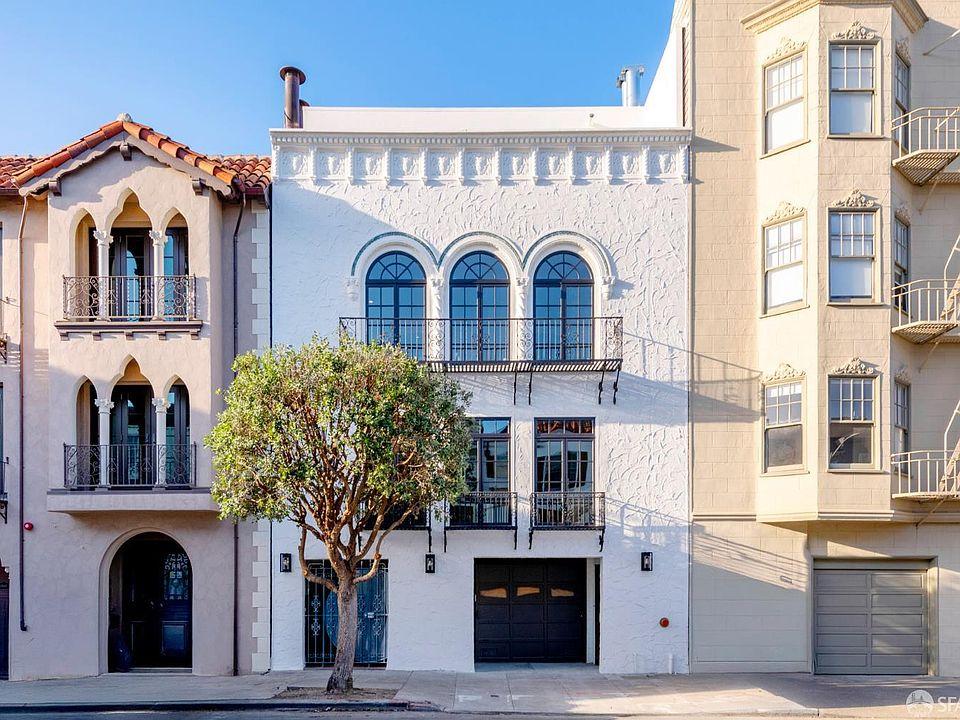
Classic architecture, original details, and what to consider before purchasing a Marina home.
San Francisco's Marina District is known for its beautiful architecture, waterfront lifestyle, and some of the city's most distinctive homes. But behind the stucco façades, arched entryways, and original details, there are important things buyers should understand before purchasing an older property.
I'm Monica Pauli, a Founding Member of Compass San Francisco, with over 25 years of experience, $200M+ in annual sales, and $2B+ in career sales. I've represented buyers and sellers throughout the Marina District, and I know how much a home's architecture, condition, renovation history, and location can influence a buyer's decision.
The Marina has some remarkable homes, but not every historic-looking property comes with the same maintenance needs, renovation possibilities, or structural considerations.
Here's what I encourage buyers to look at before making a purchase.
What Makes Marina District Architecture Unique?
Much of the Marina District was developed during the 1920s and early 1930s, following the 1915 Panama-Pacific International Exposition.
That period helped shape the neighborhood's architectural identity, which remains visible along Marina Boulevard and the surrounding residential streets.
According to San Francisco Heritage, the neighborhood features a combination of Period Revival, Art Deco, and Streamline Moderne architecture.
Mediterranean and Spanish Revival Homes
These are among the Marina's most recognizable residential styles.
Common features include stucco exteriors, red clay tile roofs, arched entrances, decorative ironwork, and colorful tile details.
Many homes have retained these architectural features, while others have been renovated to accommodate contemporary living.
Art Deco Buildings
Art Deco influences are especially noticeable in some of the Marina's apartment and residential buildings.
Geometric patterns, decorative entrances, and distinctive exterior details reflect the design trends of the early twentieth century.
Streamline Moderne Architecture
Streamline Moderne introduced a different architectural expression, with rounded corners, smooth surfaces, horizontal lines, and simplified decorative features.
These buildings add another layer of character to the Marina's residential streets.
For buyers, understanding the architectural style is more than appreciating how a home looks. It can also help explain the construction methods, maintenance needs, and renovation considerations associated with a property.
Why Original Architectural Details Matter
When I show older homes in the Marina, I encourage buyers to pay attention to the details that make each property distinctive.
Original wood windows, decorative tile, plasterwork, staircases, wrought iron, and period finishes can contribute to a home's character.
However, maintaining or restoring those details may require specialized materials and contractors.
For example, replacing original windows or restoring a clay tile roof may involve different costs and approval requirements than working on a newer property.
I always recommend understanding which features are original, which have been replaced, and what work may be needed in the future.
A beautifully preserved home can be appealing, but buyers should also understand what maintaining that character involves.
What Should Buyers Know About Renovations and Permits?
One of the most important parts of evaluating an older Marina home is reviewing its renovation history.
An updated kitchen, modern bathroom, or remodeled living area doesn't necessarily tell the full story of the work completed throughout the property.
Before purchasing, I encourage buyers to review available building permits, inspection records, and disclosure documents.
Some questions worth asking include:
- Were major renovations completed with the required permits?
- Were permits finalized?
- Has the electrical or plumbing system been updated?
- Were structural changes made to the property?
- Are there outstanding permits or building violations?
- Could future renovations require additional historic preservation review?
San Francisco's Department of Building Inspection and Planning Department maintain information that can help buyers research these questions.
Buyers considering major changes should also investigate the feasibility of their plans before assuming an older home can be easily remodeled.
Understanding Seismic Considerations in the Marina
The Marina has a unique geological history.
Parts of the neighborhood were built on artificial fill, and the area experienced significant damage during the 1989 Loma Prieta earthquake.
The U.S. Geological Survey has extensively documented the effects of soil conditions and liquefaction in the Marina.
That history makes property-specific due diligence especially important.
It does not mean that every Marina home has the same level of seismic risk or structural condition.
When evaluating a property, I encourage buyers to review:
- Foundation condition and construction history
- Available seismic retrofit documentation
- Records of previous structural improvements
- Earthquake-related disclosures
- Inspection findings and recommendations
- Relevant soil and geological information
Depending on the property, a qualified structural engineer or geotechnical specialist may provide valuable additional insight.
The goal is to evaluate the individual home rather than make assumptions about the entire neighborhood.
Is Every Older Marina Home Historically Protected?
Not necessarily.
One misconception about older San Francisco homes is that every building with historic architecture is officially protected.
A home may have beautiful original detailing without being designated as a historic landmark.
San Francisco has specific preservation classifications, and different requirements can apply depending on a property's designation and the work being proposed.
Even an undesignated older building may require additional historical-resource evaluation for certain projects.
Before planning significant exterior changes, buyers should review the property's status through the San Francisco Planning Department.
The City's Property Information Map is a helpful starting point for researching historic designations and available property information.
Understanding these details early can help buyers make more informed renovation decisions.
What Should Buyers Check Before Purchasing an Older Marina Home?
Every property is different, but there are several areas I encourage buyers to evaluate carefully.
1. Foundation and structural condition
Review the building's structural history, inspection findings, and any available seismic retrofit documentation.
2. Renovation and permit history
Confirm the status of major improvements, completed permits, and outstanding issues.
3. Original architectural features
Understand which details have been preserved, altered, or replaced, and whether specialized maintenance may be required.
4. Historic preservation status
Check whether the property has any historic designation or review requirements that could affect future alterations.
5. Major building systems
Evaluate the roof, plumbing, electrical systems, drainage, windows, and other components that may require attention.
6. Future renovation plans
If you're considering substantial changes, investigate permitting requirements, structural feasibility, and potential costs before making assumptions.
These considerations are particularly important when comparing a beautifully renovated home with one that still has much of its original construction.
How Does This Affect the Way I Help Marina Buyers?
What I love about Marina real estate is that homes can feel completely different even when they're only a few blocks apart.
A Mediterranean-style residence with original details may appeal to one buyer, while another may prefer a remodeled home with contemporary interiors and fewer immediate projects.
Location also matters.
Buyers looking near Marina Boulevard may prioritize waterfront views and proximity to Marina Green. Others prefer the quieter interior blocks near Chestnut Street.
I've represented buyers and sellers on both sides of that comparison, including sales on Marina Boulevard, Jefferson Street, Broderick Street, and Retiro Way.
In my article about Marina Boulevard versus the Interior Marina, I explain how location, views, privacy, and daily lifestyle can influence a buyer's decision.
For historic homes, I take that evaluation a step further by helping clients understand the property's architectural character, available disclosures, renovation history, and potential ownership considerations.
My goal is to make sure buyers understand what they're purchasing, not just what they see during a showing.
Frequently Asked Questions About Historic Marina District Homes
What architectural styles are common in San Francisco's Marina District?
Mediterranean Revival, Spanish Revival, Art Deco, and Streamline Moderne are among the architectural styles associated with the Marina's development during the 1920s and early 1930s.
Are all older Marina District homes protected historic landmarks?
No. A home may have historic architectural features without having an official landmark designation. Buyers should verify each property's preservation status through San Francisco Planning.
Should buyers get a structural inspection before purchasing an older Marina home?
A structural evaluation can be especially helpful when a property's age, foundation condition, renovation history, or inspection findings raise questions. Buyers should consult qualified professionals based on the property's specific circumstances.
Can buyers renovate historic homes in the Marina District?
Many older Marina homes can be renovated, but the approval process depends on the proposed improvements, the property's condition, and any applicable planning or historic preservation requirements.
How can Monica Pauli help buyers purchasing older homes in the Marina District?
With more than 25 years of San Francisco real estate experience, I help buyers compare properties, review available disclosures, understand neighborhood differences, and coordinate appropriate professional guidance throughout the purchase process.
Final Thoughts
The Marina District offers a wonderful combination of architectural character, neighborhood amenities, and access to San Francisco's waterfront.
For buyers considering an older home, understanding the property's history is just as important as appreciating its appearance.
Original details can make a property special, but knowing what has been maintained, updated, or left for future owners is equally important.
Whether you're interested in a beautifully preserved Mediterranean-style residence or a Marina home with renovation potential, I'll help you compare your options and understand the details before making a decision.
Explore my Marina District neighborhood guide for more information about the area and local real estate.
San Francisco is my city. Real estate is my passion. Getting results for my clients is my promise. Let's talk.
Monica Pauli | Compass San Francisco
CA DRE #01309178
(415) 902-9502
[email protected]
monicaslist.com